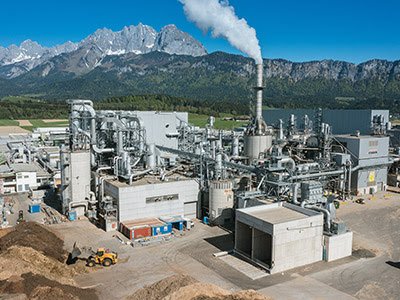
The construction of the power plant by EGGER at the plant in St. Johann in Tirol reaches an important milestone with the first electricity generated.
Since construction began in spring 2024, the wood-based material manufacturer EGGER has invested around EUR 80 million in the next expansion stage of the energy and environmental project at its plant in St. Johann in Tirol (AT). At its heart is a new power plant with a steam boiler and combined heat and powergeneration based on biogenic fuels, which will in future supply both heat and, for the first time, electricity for own production processes. A 14.5MW turbine has been installed for electricity generation, which will produce around 100,000 MWh of electrical energy per year. With the first electricity production in May, the power plant is now being gradually ramped up. Project completion and the transition to full operation are planned for Q3 2026. In normal operation, the plant will therefore run without natural gas; the plan is to self-generate electricity covering at least 70% of the plant’s needs. This will reduce the use of fossil fuels at the site to almost zero. In addition, the surrounding communities can be supplied with even more sustainable district heating.
A key technical milestone has been reached: the new power plant at EGGER’s St. Johann in Tirol location has generated electricity for the first time. The gradual transition of the facility into regular operation begins with the successful start of electricity generation.
The power plant is part of a multi-stage energy‑ and environmental project at the location and is designed to further develop the renewable energy supply and produce electricity for self-consumption. Commissioning is taking place gradually until late summer 2026, accompanied by further coordination and optimisation in interaction with existing facilities.
“The first electricity generation marks a significant stage in the technical implementation of the project,” says project manager Hans Feiersinger. “The focus now is on a stable ramp-up and the further integration of the facility into ongoing operations.”
Johannes Salvenmoser, Plant Director Technical/Production in St. Johann, adds: “We are becoming less dependent on volatile energy markets and securing our production processes in the long term.” Another advantage that supports EGGER’s climate strategy: “In normal operation, we will in future produce without natural gas.”
Positioning within EGGER’s climate strategy
The project at the St. Johann in Tirol location is part of EGGER’s long-term climate strategy. As a manufacturing company, EGGER keeps climate-impacting greenhouse gas‑ emissions along its own value chain in focus and recognises its responsibility to reduce them step by step.
EGGER pursues a clearly defined climate strategy with the goal of reducing its climate-impacting greenhouse gas ‑emissions in line with the Paris Climate Agreement. The company is committed to the Net Zero goal by 2050 and relies on emissions reduction within its own processes and locations and along the upstream and downstream value chain – not on compensation outside the value chain.
The development of location-specific energy projects, such as the new power plant in St. Johann in Tirol, fits into this long-term approach. The climate strategy is complemented by measures for the further development of production technology at EGGER plants, the expansion of renewable energy use and the regular analysis of the Corporate Carbon Footprint.
New power plant enables expansion of district heating supply
The St. Johann in Tirol plant has already had a boiler system since 2008, which generates thermal energy for the production facilities and the district heating supply for the municipalities of St. Johann in Tirol and Oberndorf by burning biomass and biogenic production residues.
The new power plant, built to the latest industrial standards, uses combined heat and power to supply, for the first time, not only thermal energy but also self-generated electricity for the production processes. Biomass, biogenic production residues from wood processing and non-recyclable wood waste will be used as fuels. Together, the two boiler plants will supply the thermal energy required for production and district heating. This will make the plant in St. Johann in Tirol largely independent of fossil fuels. There are also positive effects for the region: by expanding the district heating supply in Oberndorf and St. Johann, heating systems that use fossil energy sources could be further replaced.
Closed cycles ensure resource efficiency
EGGER produces in a resource-efficient material cycle. Among other things, sawmill by-products such as wood chips and sawdust are processed into wood-based materials together with thinning and recycled wood. Old furniture, palettes and packaging material as well as scrap material from the company’s own production are processed for material recycling. The resulting residues, which cannot be recycled, can be utilised on-site in the new power plant to generate heat and electricity without the need for additional transport. With this closed cycle, EGGER utilises the valuable resource of wood comprehensively and responsibly.